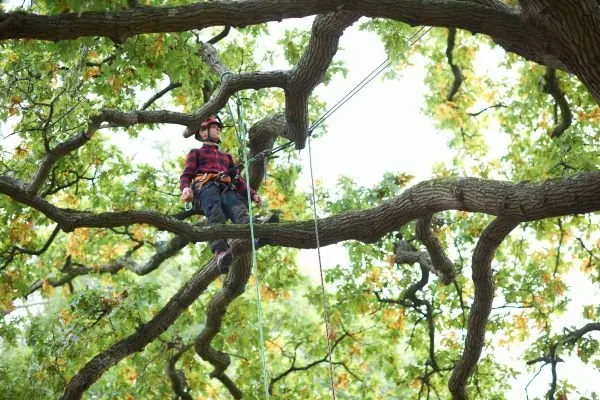
Pruning keeps the tree and fixes the problem
Pruning is the most common tree job on the Central Coast, and the one most likely to save a tree you like. Instead of taking the whole tree down or cutting back the entire canopy, the contractor removes particular branches for a particular reason.
Typical reasons to prune:
- Dead branches. Eucalypts and angophoras shed limbs naturally. Dead wood over roofs, decks, cars and paths is worth taking out before it falls.
- Roof and gutter clearance. Branches scraping tiles or dropping leaves straight into gutters, which matters more on bushfire-prone land.
- Crossing and rubbing branches. Rubbing wears through bark and invites decay.
- Wind loading. A dense crown catches more wind. Careful thinning lets gusts through.
- Light and views. Lifting the lower canopy to let light into a garden or open up a view of the water.
- Clearance for building work. Room for scaffold, a second storey, solar panels or a carport.
The main types of pruning
Deadwooding. Removing dead, dying and broken branches through the canopy. On mature gums this is often the single most useful job you can do.
Crown thinning. Taking out a portion of the smaller, inner branches so the crown is less dense. The overall size stays the same, but the tree catches less wind and lets in more light.
Crown lifting. Removing lower branches to raise the canopy above a driveway, path, roof line or lawn. Common in gardens with low, spreading angophoras and paperbarks.
Clearance pruning. Cutting branches back from buildings, fences and the service line to the house. On the network side of the meter, lines are managed by Ausgrid and its authorised contractors; only appropriately authorised workers should cut near live wires.
Formative pruning. Shaping young trees so they grow a strong structure, which avoids bigger problems later.
Central Coast trees and how they prune
Spotted gum and blackbutt. Big, heavy limbs and a habit of self-pruning. Deadwooding and selective end-weight reduction are the usual jobs.
Smooth-barked apple (angophora). Twisting branches with a tendency to drop large limbs, especially in hot, still weather and after rain. Careful thinning and removal of over-extended limbs helps.
Paperbarks. Common near lakes and in wet ground. They respond well to pruning and are often lifted to clear paths and driveways.
Jacaranda and other exotics. Prone to weak regrowth if cut hard. Light, well-placed cuts work best.
Palms. Dead fronds and seed stalks removed. Live fronds left alone.
Pruning and the rules
Central Coast Council's tree controls apply to pruning as well as removal for many trees, but routine maintenance pruning is often treated differently from heavy cutting. Waterfront and heritage properties can carry extra conditions. Check with Council before booking, especially for large or significant trees, or ask the contractor to help.
Bushfire clearing under the NSW 10/50 code covers removal and some pruning near homes on mapped land; see the 10/50 guide for the details.
How a pruning job runs
- Inspection. The contractor looks at the tree from the ground and agrees with you what needs doing.
- Climbing or platform access. Most pruning on hillside blocks is done by climbing. On flat, firm ground an elevated platform may be quicker.
- Careful cuts. Branches are removed at the branch collar, the slightly swollen area where a branch joins the trunk, so the tree can seal the wound. Heavier pieces are lowered on ropes.
- Clean-up. Gutters and roofs cleared of debris, branches chipped, lawns raked.
A few practical tips
- Photos of the problem branches from a couple of angles help when you first call.
- Note the time of year the problem shows up: falling bark in summer, leaves in gutters in autumn, branches moving in strong winds.
- If a tree has been pruned badly before, mention it. Old topping cuts change how the tree should be handled.
Pruning ranges sit alongside removal prices in the cost guide. If the tree needs reducing in height rather than tidying, see tree lopping.