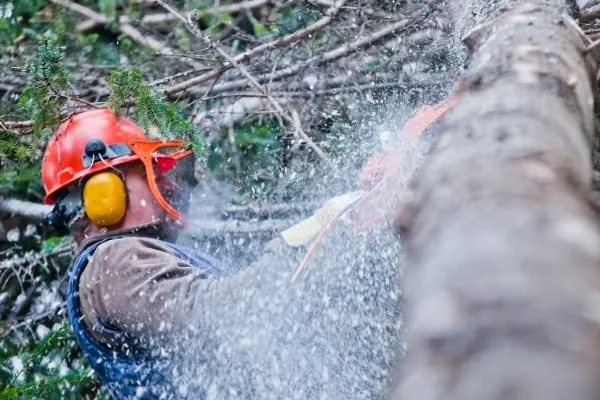
Central Coast tree prices at a glance
There is no official price list for tree work, and no government body publishes one. The figures below are our own 2026 planning ranges, in Australian dollars including GST, based on the kinds of jobs quoted around the coast. They are a guide for budgeting and for sanity-checking a quote. They are not quotes, and every job needs an on-site quote before a real number can be given.
Tree removal
| Job | Typical 2026 range |
|---|---|
| Small tree, under about 5 m, open access | $350 to $900 |
| Medium tree, about 5 to 10 m | $900 to $2,200 |
| Large tree, about 10 to 20 m | $2,200 to $4,500 |
| Very large or complex tree, over 20 m, near buildings or on a steep block | $4,500 to $6,000+ |
Lopping and pruning
| Job | Typical 2026 range |
|---|---|
| Light pruning or deadwooding, small to medium tree | $350 to $900 |
| Crown reduction or heavy lopping, medium to large tree | $900 to $2,500 |
| Large eucalypt deadwooding or reduction on a steep block | $1,500 to $3,500 |
Stump grinding
| Job | Typical 2026 range |
|---|---|
| Single small to medium stump, good access | $150 to $400 |
| Large stump or difficult access | $400 to $900 |
| Several stumps on one visit | Often priced per stump, with a lower rate after the first |
Storm make-safe and clean-up
| Job | Typical 2026 range |
|---|---|
| Fallen limb clean-up, open yard | $400 to $1,200 |
| Make-safe and removal of a tree resting on a structure | $1,500 to $6,000+ |
What moves the price on the Central Coast
Height and spread. Taller trees with wider canopies take longer to climb, cut and lower.
Slope. This is the big one on the coast. On hillside blocks around Gosford, Terrigal and the escarpment, timber usually has to be lowered on ropes and carried or hauled back to the street. That can double the time compared with a flat block.
Access. Narrow side paths, stairs, steep driveways and soft lawns limit which machines can be used. More handwork means more time.
What is underneath. Roofs, pools, fences, glasshouses and power lines all mean slower, more careful rigging.
Species and timber. Spotted gum, ironbark and blackbutt are dense and heavy. Palms are lighter but awkward. Dead trees can be brittle and slower to climb.
Equipment. An elevated platform or crane adds cost but can save hours on the right job.
Waste. Removing all logs and chip costs more than leaving firewood and mulch on site.
Approvals. Council application fees or reports are separate from the contractor's price.
Stumps. A removal price usually leaves the stump. Grinding is an extra line.
How to compare quotes fairly
Two quotes for the same tree can differ a lot, usually because they are not quoting the same job. Before comparing totals, check each quote says:
- What is being cut: the whole tree, or a reduction, and how far
- The method: climbing, platform or crane
- The stump: left low, ground out, and to what depth
- The waste: whether logs, branches and chip leave the property
- Protection: how roofs, fences and gardens will be protected
- Approvals: whether Council approval or a 10/50 check is needed, and who handles it
- Insurance: we ask the contractors we work with to hold the licences and insurance the job needs. Ask to see them before work starts.
A quote that is much cheaper than others is often leaving something out: the stump, the clean-up, or the extra time a steep block really takes.
Ways to keep the cost down
- Group jobs. Several trees, or a removal plus stump grinding, on one visit.
- Keep the wood. Firewood and mulch left on site save disposal time.
- Clear the access. Move cars, furniture and pot plants before the crew arrives.
- Act early. Deadwooding a healthy tree now is cheaper than removing a failed one later.
- Be flexible on timing. Non-urgent work can sometimes be fitted around other jobs.
Getting a real price
Every figure on this page is a planning range. The real number comes from a contractor looking at the tree, the slope, the access and what is underneath. Call (02) 4307 6753 or use the form, and mention the suburb, the type of tree if you know it, and anything nearby.
For what each job involves, see tree removal, tree lopping, pruning, stump grinding and storm damage work.