Stumps on the Central Coast
A stump left behind after a removal is more than an eyesore. It takes up space in the lawn, catches mowers and toes, and in some species sends up suckers for years. On sandy blocks around the lakes and peninsula, old stumps can also attract termites, which is one more reason people want them gone.
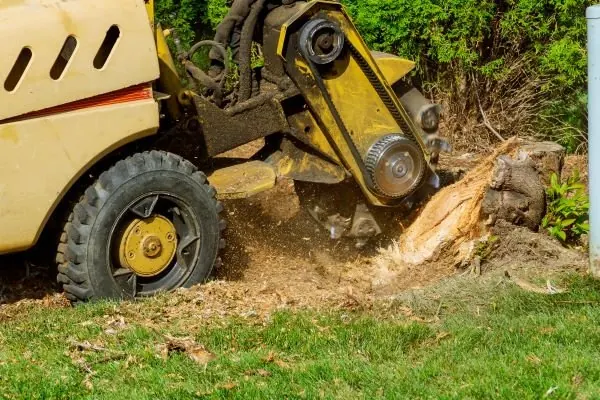
Stump grinding is usually the fastest, least disruptive way to deal with it. A grinder uses a spinning cutting wheel to chew the stump into chips, working down below the surface. There is no big hole to fill and the lawn can usually go back down within days.
Grinding or full removal?
Grinding is the usual choice for gardens and lawns. It leaves the deep roots in the ground, where they slowly decay. It suits:
- Lawns and garden beds where you want to replant or turf
- Stumps close to fences, paths and walls where digging would cause damage
- Tight blocks where an excavator cannot get in
Full stump and root removal digs or lifts out the stump and main roots, usually with an excavator. It suits:
- New slabs, driveways, pools, retaining walls and extensions
- Areas where the remaining roots would interfere with footings or pipes
- Clearing for a landscaping project with heavy earthworks
Removal is louder and messier and leaves a large hole, but you start with clean ground.
What affects a stump grinding job
Size. The diameter of the stump at ground level, and how far the root flare spreads.
Species. Hard, dense timbers such as spotted gum, blackbutt and ironbark take longer to grind than softer exotics. Palm stumps are fibrous and behave differently from timber.
Access. Narrow side gates, stairs and steep driveways limit the size of machine that can get in, and smaller machines take longer.
Ground. Stumps growing in sandstone, among rocks, or wrapped around old concrete and edging slow the job down and can damage cutting teeth.
Surface roots. Roots running across a lawn can be ground out too, but they add time and should be included in the quote.
Before the grinder arrives
- Locate services. Pipes, cables and irrigation often run near trees. Use a free Before You Dig Australia request before excavation work, and tell the contractor what you know about your own lines on the property.
- Clear the area. Move pots, furniture and anything that could be hit by flying chips.
- Measure the access. The narrowest point between the street and the stump, including gates, steps and tight turns.
- Flag nearby features. Septic tanks, pool equipment and garden lighting are worth pointing out.
After grinding
Grindings are normally raked back into the hole and the area tidied. Over the following months the chips settle and break down. For a lawn, most people remove a share of the chips, fill with good soil, let it settle and then turf or seed. For a garden bed, chips can be mixed into the soil, though fresh wood chips can draw nitrogen from the soil as they break down, so add some fertiliser if planting straight away.
If you are planting a new tree, choose a spot a little away from the old stump so the new roots are not fighting decaying wood.
Palm stumps
Palms, including cabbage tree palms and planted species, leave fibrous stumps with a mass of fine roots rather than a woody root plate. They can be ground or dug out. Because they do not have the same root system as a hardwood, removal is often simpler, though a large palm in a confined space can still be fiddly.
Bushfire-prone blocks
On properties backing onto bush, leftover stumps and grindings are not a major fire issue on their own, but large piles of dry mulch close to the house are worth spreading out or removing. If you are clearing under the NSW 10/50 entitlement, the code's conditions apply to how vegetation is removed; see the 10/50 guide.
Pairing with a removal
If a tree is coming down, it is usually cheaper to have the stump ground on the same visit than to bring a machine back later. Ask for it as a separate line on the tree removal quote so you can decide either way.
Typical price ranges for stumps appear in the cost guide.