Tree removal across the Central Coast, done in the right order
Tree Removal Central Coast is a referral service for homeowners, landlords and strata managers between the Woy Woy Peninsula and the northern lakes. You tell us about the tree; we pass the job to an independent local tree contractor who visits, checks the access and the approvals, and gives you a written price. Free quotes, no obligation, and the same phone number for every suburb: (02) 4307 6753.
Removal is not always the answer. A lot of the calls that start with "this tree has to go" end with a lighter job: a few dead limbs out of a spotted gum, a crown reduced so it stops scraping the gutter, or a stump ground out after a storm. The point of a site visit is to work out which job you actually have.
Why Central Coast tree jobs are their own kind of work
The coast packs a lot of different country into a short drive. A job in a flat street on the peninsula looks nothing like one on a steep block above Terrigal, and neither looks like a rural lot outside Wyong.
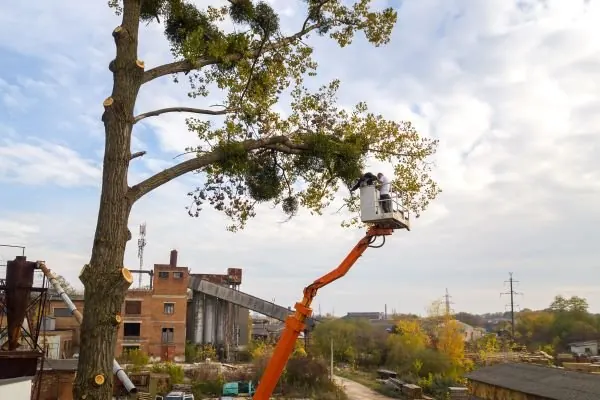
Slope. Big parts of the coast are hillside: the escarpment behind Gosford, the ridges between Erina and Kincumber, the steep streets running down to the beaches. On a sloping block the timber usually cannot be dropped and walked out. It is lowered on ropes, carried, or lifted with a crane, and that drives the time and the price.
Sand and water. The peninsula, The Entrance and the land around Toukley sit on sand, often with a high water table. Roots there run shallow and wide, which affects how a tree stands up in a wet southerly and how a stump comes out.
Bush on the back fence. Many homes back onto reserves, national park or bushland corridors. That brings the NSW bushfire rules into play, along with native animals using hollows and the need to keep debris out of creek lines.
Lakes, creeks and Brisbane Water. Waterfront and creek-side trees often carry extra rules, and the ground near the water can be soft for machinery.
The trees we hear about most
- Spotted gum. Tall, straight and handsome, with a heavy crown that can shed limbs. Common on ridges and in older garden blocks.
- Smooth-barked apple (angophora). The twisting, salmon-pink trunks of the coastal sandstone country. Prone to dropping big branches, and often growing hard against rock or retaining walls.
- Blackbutt. A large, fast eucalypt on the better soils and slopes. Mature trees near houses are a frequent reason for a quote.
- Turpentine and forest red gum. Found through the valleys and the northern hills.
- Cabbage tree palms and planted palms. Tall, slender and often in tight spots near pools and paving.
- Camphor laurel, privet and other weeds. Dense, fast-growing trees that shade gardens and spread seed into the bush.
- Norfolk Island pines. Tall and wind-exposed near the beaches, and never a simple fell in a built-up street.
Removal, lopping or pruning?
People use these words loosely, so it is worth being precise when you ask for a price.
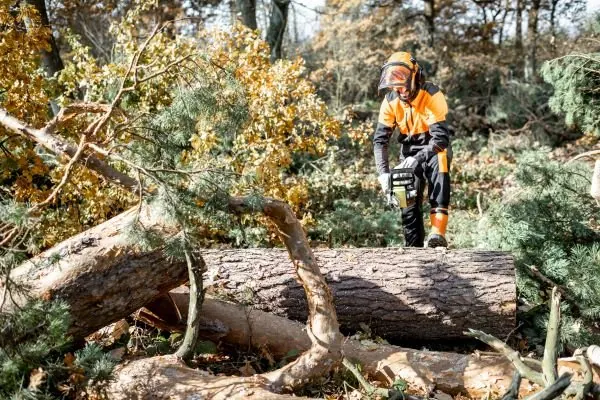
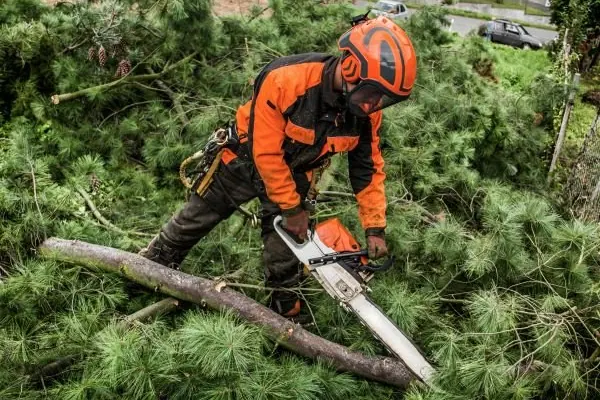
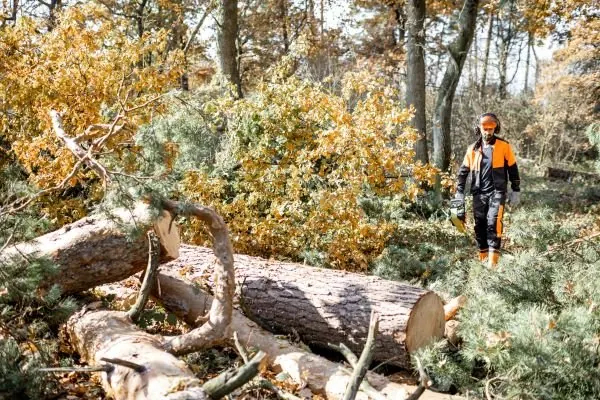
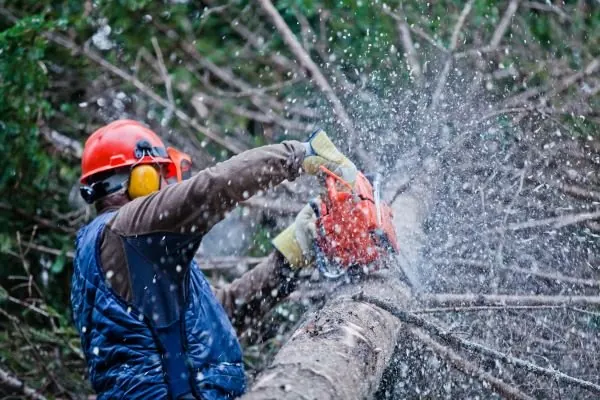
Tree removal takes the whole tree down, leaving a low stump unless you also want it ground out. It suits dead or dying trees, trees with a split trunk or a new lean, and trees in the way of a building project. See tree removal.
Tree lopping reduces the height or spread of a tree. Done well, branches are cut back to a suitable union. Done badly, the tree is topped and grows back weaker and bushier. See tree lopping.
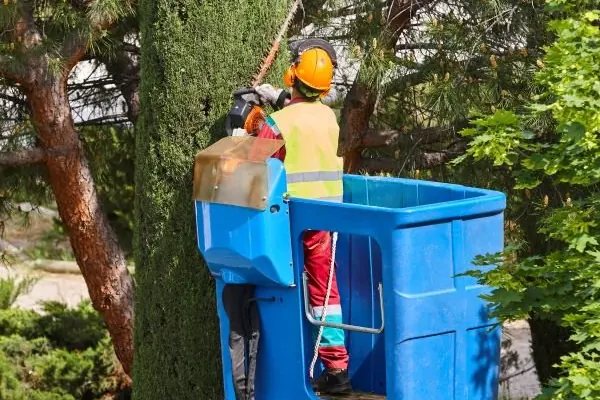
Pruning is selective: deadwood out, rubbing branches removed, a crown thinned so wind passes through, and clearance over the roof, gutters and the driveway. See tree pruning.
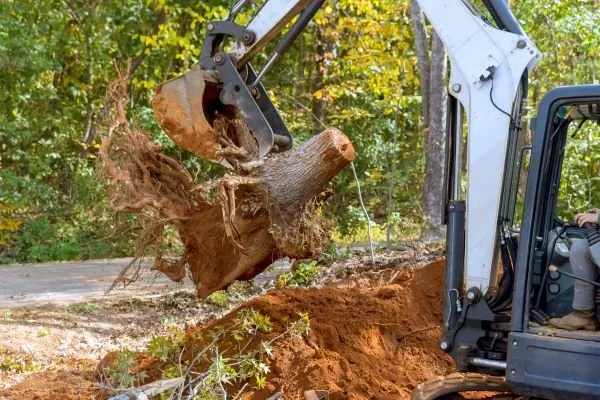
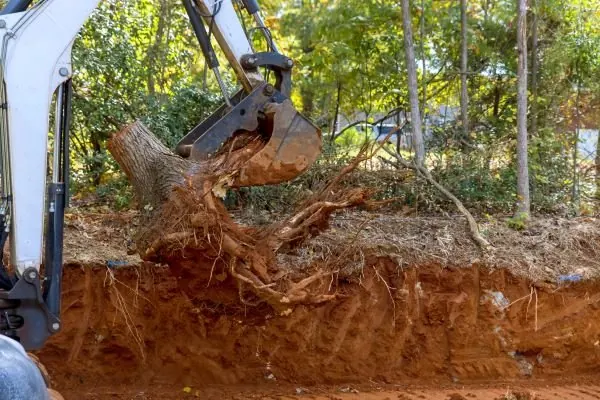
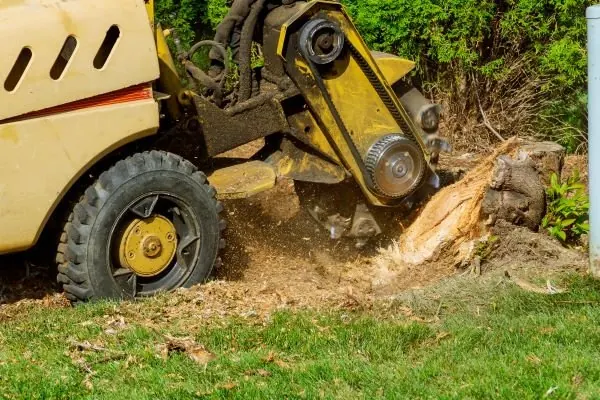
Stump grinding takes what is left below the surface so you can turf, pave or replant. See stump grinding.
How a job usually runs
- Tell us about the tree. Call or use the form. Mention anything near it: the house, a fence, the power line to the house, a pool, a neighbour's shed, a creek.
- A contractor looks at it on site. They check the species and condition, the slope and access, where the wood can go and whether approval is needed.
- You get a written quote. It should say what is cut, how far, what happens to the stump and whether the wood and mulch leave the property.
- Approvals are sorted. If Council needs to approve the work, that happens before a booking. If the 10/50 entitlement applies, the property is checked against the RFS map.
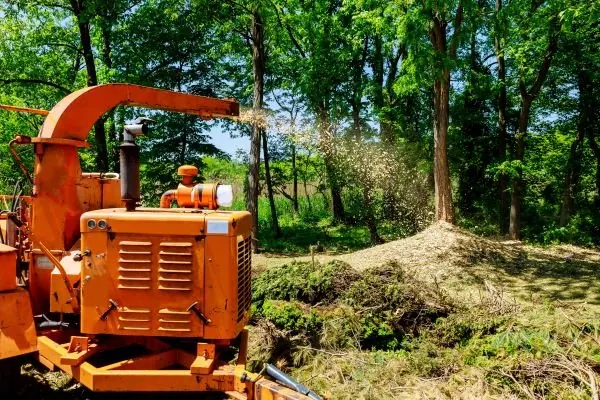
- The work is done and the block cleaned up. Chipped, raked and blown down, and you check it before the crew leaves.
Approvals come before chainsaws
On the Central Coast, two sets of rules matter most for trees on private land. Central Coast Council regulates the removal and pruning of many trees through its planning controls. Separately, the NSW Rural Fire Service 10/50 code lets owners in mapped bushfire-prone areas clear some trees near a home without Council approval, within strict limits. Neither is a reason to guess. Our 10/50 clearing rule guide sets out what the entitlement covers and what it does not, and the contractor can help you check before work starts.
Storm season
East coast lows and summer thunderstorms bring down limbs across the coast every year. If a tree has come down on a house, car or fence, keep everyone well clear. If it is touching a power line, stay at least eight metres away and call Ausgrid on 13 13 88. The NSW SES takes storm help requests on 132 500. Once the scene is safe, call us about the clean-up; see storm damage tree work.